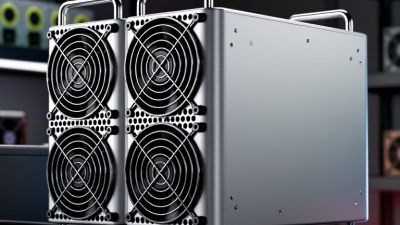
Top ASIC Miner to Buy for Bitcoin Mining?
Choosing the top ASIC Miner for Bitcoin mining is not a race for the largest hashrate. The right machine must fit your electricity price, cooling setup, budget, and tolerance for noise. Mining analyst Jaran Mellerud’s work highlights the importance of operating costs in mining economics. In paraphrase: “Compare efficiency and power costs before paying extra for headline hashrate.” Treat that as a decision-making principle, not a guarantee of profit.
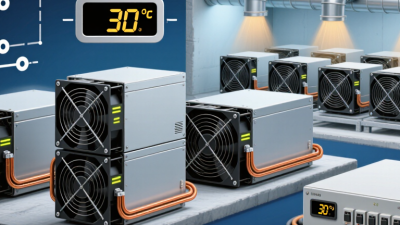
Heat matters. A miner running in a garage can raise room temperatures quickly, while its fans may sound like a shop vacuum. Check the manufacturer’s power and hashrate specifications, then compare them with independent reviews and current electricity rates. Small changes in uptime or power cost can reshape the numbers. They can also make a promising calculator look too cheerful.
This guide will compare leading ASIC Miner models by efficiency, performance, price, and practical operating needs. It will also explain which specifications deserve attention, including joules per terahash, power draw, and cooling requirements. No model is best for every buyer. Availability, network difficulty, Bitcoin’s market price, and local energy costs change over time. A careful comparison helps, but it cannot remove uncertainty. Check current product details before buying, and leave room in your calculations for downtime, repairs, and assumptions that may prove wrong.
Bitcoin ASIC Mining Basics: SHA-256 and the 3.125 BTC Block Subsidy
Bitcoin mining secures the network through proof of work. Miners repeatedly hash block-header data with SHA-256, searching for a result below the network’s target. Bitcoin applies SHA-256 twice in this process. The work is computationally demanding, but checking a proposed result is quick. Specialized ASIC machines perform these calculations far more efficiently than general-purpose computers.
Since the 2024 halving, the block subsidy has been 3.125 BTC per block. It is newly issued bitcoin, separate from transaction fees, and goes to the miner or mining pool that produces an accepted block. Blocks arrive about every ten minutes on average, not on a strict schedule. A miner’s share of the network’s total hash rate affects its odds, but does not guarantee steady income. Heat and electricity costs can be easy to underestimate; a warm room and a rising power bill make the trade-off feel real.
Tips: Compare ASIC efficiency in joules per terahash, not just headline hash rate. Estimate local electricity costs, cooling needs, and pool fees before buying. Use conservative bitcoin-price and uptime assumptions. Small differences matter, and the estimate will still be imperfect.
Key Buying Metrics: Hashrate (TH/s), Efficiency (J/TH), and Power (W)
Choosing a top ASIC miner starts with three linked figures: hashrate, efficiency, and power draw. Hashrate measures computing capacity in terahashes per second (TH/s), but a bigger number alone does not guarantee better returns. Check joules per terahash (J/TH): lower figures mean less energy used for each unit of work. The Bitcoin Mining Council’s Q4 2023 survey reported average fleet efficiency of 29.4 J/TH among participating miners. That is useful context, not a guarantee for every machine or the entire network.
Power makes those specifications tangible. A 200 TH/s unit rated at 20 J/TH draws about 4,000 watts: roughly 96 kWh over 24 hours at full load. Compare that consumption with your electricity tariff, cooling needs, and the miner’s actual operating conditions. Also check whether the quoted power figure includes fans. It may not. I’d be cautious about treating a neat calculator result as a forecast; uptime, heat, and changing network difficulty can shift the outcome.
Tips: Compare machines at the same operating settings. Multiply J/TH by TH/s to estimate watts, then verify the result against the manufacturer’s specification sheet. Use measured facility electricity costs, not just the advertised hashrate.
Top ASIC Miner to Buy for Bitcoin Mining?
Compare representative SHA-256 ASIC configurations by hashrate, energy efficiency, and power draw.
| Configuration |
Hashrate (TH/s) |
Efficiency (J/TH) |
Power (W) |
| Standard air-cooled |
200 |
17.5 |
3,500 |
| Efficient air-cooled |
234 |
15.0 |
3,510 |
| High-output air-cooled |
270 |
13.5 |
3,645 |
| High-output hydro-cooled |
473 |
12.0 |
5,676 |
Higher hashrate means more computing capacity; lower J/TH means better energy efficiency. Check electricity costs, cooling requirements, and available power capacity before choosing. Figures are representative published specifications; actual operating results can vary.
ASIC Comparison: S21 XP (270 TH/s, 13.5 J/TH) vs S21 Pro (234 TH/s)
Choosing between these two miners is less about the headline number and more about site limits. The S21 XP is rated at 270 TH/s and 13.5 J/TH, giving it a clear efficiency benchmark. That works out to roughly 3,645 watts at the stated rate. That is substantial. Plan for dedicated electrical capacity, strong ventilation, and steady cooling before estimating returns. Actual output can shift with temperature, firmware, and operating conditions. Specifications are not a profit guarantee.
The S21 Pro reaches 234 TH/s, about 36 TH/s below the XP. The XP therefore offers roughly 15.4% more hashrate. However, the supplied comparison does not include the Pro’s J/TH figure, so its efficiency cannot be fairly ranked here. Ask for a verified power reading at the intended voltage, not just a product-sheet estimate. Then compare electricity costs, pool fees, uptime, heat removal, and purchase price over the same period. Small details matter. A machine that runs hot or trips a circuit may deliver less useful work despite its higher rating. The XP looks stronger on paper, but it is not automatically the better buy. That call still depends on local power pricing and measured Pro efficiency.
Purchase Decision: Match ASIC Efficiency to Power Price and Mining Site
Choosing a top ASIC miner starts with the mining site, not the specification sheet. Compare energy efficiency in joules per terahash, then estimate daily electricity costs using your actual rate. A small efficiency advantage may matter less than a low, predictable power price. Check for demand charges, seasonal tariffs, and cooling costs. Small details bite.
Measure available power and ventilation before choosing a machine. A unit that draws more electricity than the site can safely supply is not a bargain. Allow headroom. In a warm room, fans may work harder, while poor airflow can lead to downtime. Also consider noise, maintenance access, and how easily you can replace parts. A few hours offline each month can change the calculation.
Estimate revenue with current network difficulty and Bitcoin price, but treat projections as uncertain, not promised income. Compare machines using the same assumptions for electricity, uptime, and pool fees. A spreadsheet helps, though it can create false confidence if the power bill is incomplete. I would rather use a conservative uptime estimate than build a purchase decision around perfect conditions. Check the site’s real power cost first.