How to Choose the Best ASIC Miner for Your Needs?
Choosing the best Asic Miner is not about chasing the highest advertised hash rate. It is about matching performance with electricity costs, cooling capacity, space, and operational goals. A modern machine may deliver impressive terahashes, yet consume too much power for a home facility. Ben Gagnon, a Bitcoin mining executive and industry specialist, has emphasized, “Energy is the most important input cost in Bitcoin mining.” That principle should guide every comparison.
Start with efficiency, measured in joules per terahash. A lower figure usually means better energy performance. Check the miner’s actual wattage, not only its marketing specifications. Then calculate daily electricity expenses using your local rate. Small differences become significant after months of continuous operation. Noise matters too. Some units sound like industrial fans in a closed room. Heat output can also turn a cool workspace into an uncomfortable, expensive environment.
Look beyond the machine itself. Review warranty coverage, firmware support, delivery conditions, repair access, and mining-pool compatibility. A slightly older Asic Miner may be the wiser choice if it has stable software and affordable replacement parts. Conversely, the newest model may lose its advantage when electricity prices rise. Mining calculators help, but their results are estimates, not promises. Network difficulty changes. Bitcoin prices move. Hardware can fail.
A careful buyer should record assumptions before purchasing. This step is easy to skip. It should not be. Compare realistic scenarios, including downtime and seasonal cooling costs. The best Asic Miner is rarely the most powerful one. It is the model that fits your budget, infrastructure, risk tolerance, and long-term operating plan.
Identify ASIC Algorithms and Coin Compatibility: SHA-256, Scrypt, or KHeavyHash
Choosing an ASIC miner starts with its algorithm, not its advertised speed.
The algorithm decides which coins the machine can process.
SHA-256 miners suit coins using the SHA-256 proof-of-work system.
Scrypt miners target Scrypt-based networks.
KHeavyHash machines are designed for networks built around KHeavyHash.
These categories are not interchangeable.
Check compatibility before comparing prices.
A miner may have excellent hashrate, yet support only one algorithm.
Confirm the coin’s current algorithm on its official documentation.
Then verify pool support, firmware requirements, wallet compatibility, and payout rules.
I would also compare joules per terahash or gigahash, depending on the algorithm.
Lower energy use usually matters more than impressive raw hashrate.
Room conditions matter too.
A high-power unit can sound like a small vacuum cleaner and produce steady heat.
Measure your electricity cost, ventilation, and available circuit capacity.
I once focused too heavily on purchase price and underestimated cooling expenses.
That was a poor assumption.
Network difficulty can also change, reducing expected coin production.
Use conservative estimates and test the calculator with higher power costs.
If your goal is flexibility, confirm whether the machine can switch between supported coins within the same algorithm.
It cannot usually move from SHA-256 to Scrypt or KHeavyHash.
That limitation is easy to miss.
Compare Hashrate and Efficiency: 17.5 J/TH for Bitmain’s S21
Choosing an ASIC miner requires more than comparing advertised hashrate. A current-generation unit rated at 17.5 J/TH offers strong energy efficiency for its class. This figure means it uses about 17.5 joules to produce one terahash. Lower energy use can reduce operating costs, especially where electricity prices change during the day. However, the rating comes from controlled conditions. Actual results depend on temperature, power quality, firmware settings, and cooling performance.
Tips:
Check the measured wall power, not only the specification sheet. Calculate daily energy use with your local electricity rate. Leave space around the miner for airflow. A dusty filter can quietly reduce efficiency. Also, verify noise levels before installing it near living areas.
Hashrate still matters because higher output can improve earning potential. Yet, greater hashrate often brings higher power demand and heat. Compare both figures together. A miner producing 200 TH/s at 17.5 J/TH may be more practical than a faster model with poor efficiency. Inspect warranty terms, supplier history, and repair access before purchasing. These details are less exciting, but they affect long-term reliability. One common mistake is assuming laboratory efficiency will remain constant. I would recheck performance after several weeks, especially during hotter weather. A small efficiency loss can become expensive over time.
Estimate Profit Using BTC Rewards, Electricity Rates, and Pool Fees
Choosing an ASIC miner starts with a realistic profit estimate, not a headline hash rate. Use the miner’s rated power draw and your local electricity price. A 3,000-watt machine running continuously consumes about 72 kWh daily. At $0.10 per kWh, energy costs reach $7.20 each day. Then estimate expected BTC rewards from current network difficulty, hash rate, and pool payout data. Subtract the pool fee, usually applied to earned rewards, before comparing revenue with power costs. Bitcoin rewards change often.
Tips: Record actual power use with a meter, because wall consumption can exceed specifications. Check the pool’s fee, payout threshold, and recent reward statistics. Include cooling, internet, repairs, and downtime in your spreadsheet. A simple formula helps: net profit equals BTC revenue minus electricity, pool fees, and operating costs. Use conservative BTC prices and reward estimates. This is safer.
My practical approach is to model daily, monthly, and break-even results in separate rows. Test optimistic, expected, and weak reward scenarios. My first estimates were too optimistic because I ignored downtime and rising difficulty. A miner can look profitable at one BTC price and lose money after a price drop. That uncertainty deserves attention. Do not treat calculator outputs as guaranteed income. Refresh the figures regularly, since network difficulty, fees, and uptime can shift without warning. I would also compare the purchase cost with expected net earnings over its useful life. This step is easy to overlook.
How to Choose the Best ASIC Miner for Your Needs? - Estimate Profit Using BTC Rewards, Electricity Rates, and Pool Fees
Estimate assumptions: Bitcoin price: $100,000/BTC; network hashrate: 800 EH/s; block subsidy: 3.125 BTC; 144 blocks per day; mining-pool fee: 2%.
Estimates exclude transaction fees, hardware purchase cost, cooling, downtime, taxes, and other operating expenses. Electricity costs use continuous 24-hour operation.
| Representative ASIC configuration |
Hashrate |
Power draw |
Efficiency |
Estimated BTC/day
before pool fee |
Estimated daily pool revenue
after 2% fee |
Net/day at
$0.05/kWh |
Net/day at
$0.10/kWh |
Net/day at
$0.15/kWh |
Break-even electricity rate* |
| Entry-level efficiency tier |
100 TH/s |
3.0 kW |
30 J/TH |
0.00005625 BTC |
$5.51 |
$1.91 |
−$1.69 |
−$5.29 |
$0.0766/kWh |
| Mid-range efficiency tier |
200 TH/s |
3.5 kW |
17.5 J/TH |
0.00011250 BTC |
$11.03 |
$6.83 |
$2.63 |
−$1.58 |
$0.1313/kWh |
| High-output efficiency tier |
300 TH/s |
5.5 kW |
18.3 J/TH |
0.00016875 BTC |
$16.54 |
$9.94 |
$3.34 |
−$3.26 |
$0.1253/kWh |
| Large-farm efficiency tier |
400 TH/s |
7.2 kW |
18 J/TH |
0.00022500 BTC |
$22.05 |
$13.41 |
$4.77 |
−$3.87 |
$0.1276/kWh |
Calculation: Estimated BTC/day = miner hashrate ÷ assumed network hashrate × 144 blocks/day × 3.125 BTC. Net/day subtracts the 2% pool fee and electricity expense (power draw × 24 hours × electricity rate). *Break-even electricity rate is the maximum rate at which estimated daily mining revenue covers electricity alone; it does not include hardware or other costs. Network hashrate and BTC price are scenario inputs, so actual results will vary.
Assess Cooling, Noise, Firmware, Warranty, and 24/7 Operating Demands
How to Choose the Best ASIC Miner for Your Needs?
Assess Cooling, Noise, Firmware, Warranty, and 24/7 Operating Demands
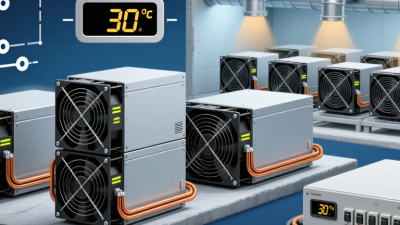
An ASIC miner is not just a hashrate figure; it is a heat source that runs for long stretches. Check the rated power draw, then consider how your electrical setup handles continuous load. A unit drawing roughly 3,000 watts releases substantial heat into a room. Measure the available space and airflow before buying. Hot exhaust needs a clear path out, while intake air should stay clean and unobstructed. Dust builds up. So does heat.
Noise can also shape where a miner belongs. Fans may sound like a steady shop vacuum, making a spare bedroom a poor choice. Review the published noise level, but remember that room surfaces and distance change what you hear. Firmware affects monitoring, fan control, and access to operating settings. Prefer clear documentation and update notes, and avoid changing unfamiliar settings without recording the original values. Mistakes happen. Check warranty length, coverage limits, and who handles repairs before comparing prices. Ask how downtime is managed, since a failed fan or power component can interrupt operation. I would not judge a machine on advertised efficiency alone; real room temperature, electrical costs, and maintenance habits matter, and those estimates can be wrong. Plan for routine checks, safe cabling, and a way to monitor temperatures around the clock.