Leave Your Message
Choosing the best ASIC Miner manufacturer in China is not a logo contest. Buyers need to compare efficiency, reliability, support, and verifiable operating costs. The Cambridge Centre for Alternative Finance’s 2023 Digital Mining Industry Report estimated that sustainable sources supplied 52.6% of the energy mix reported by surveyed miners. That figure offers useful context, but it is not a current measurement of every mine or manufacturer. Conditions change. So do electricity prices, network difficulty, and hardware availability.
A serious comparison should begin with energy efficiency, usually stated in joules per terahash, and measured power consumption under documented conditions. Ask for test results, warranty terms, spare-parts availability, and realistic repair timelines. Check whether the manufacturer supports firmware updates and can explain how its efficiency figures were obtained. Independent testing matters; a polished datasheet alone is not proof. Very simple.
Factory location and company size can be relevant, but neither guarantees consistent quality. Buyers should verify product specifications and service commitments directly, and compare the total cost of ownership rather than purchase price alone. Even a careful checklist has a blind spot: real-world performance depends on installation, cooling, and maintenance. The best choice, then, is the manufacturer whose claims can be checked and whose support remains dependable after delivery.
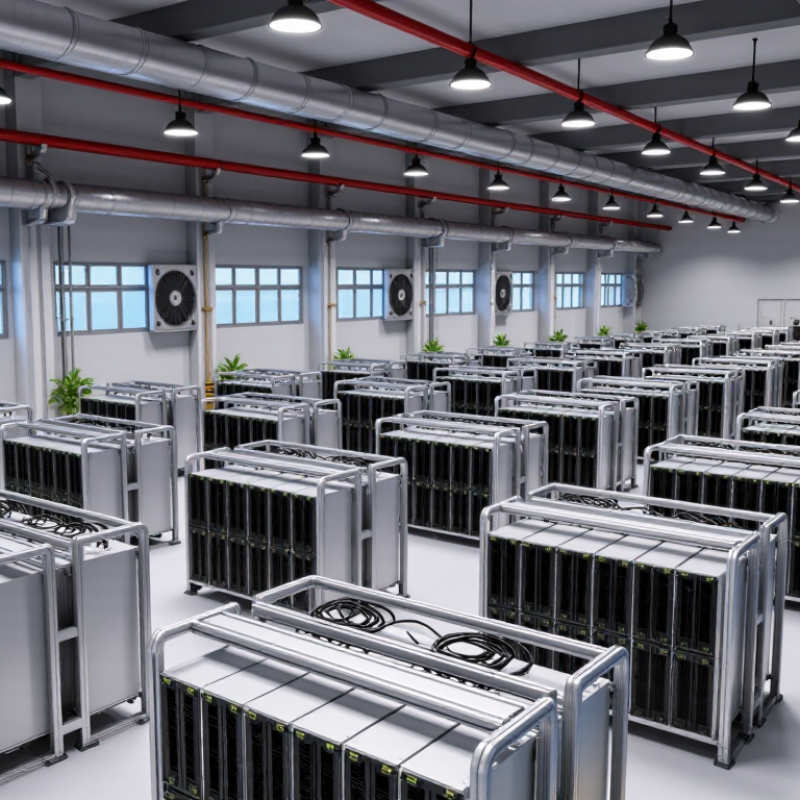
ASIC miner manufacturers turn specialized chip designs into machines built for one task: processing cryptographic hashes. Their work begins with chip architecture and power targets, then moves through circuit boards, cooling systems, firmware, and enclosure design. Some firms develop chips in-house; others coordinate with foundries and component suppliers. That distinction matters. A brochure may show peak efficiency, but real results depend on voltage settings, room temperature, and stable power. In a test room, engineers run units, measure chip temperatures, and listen for fan imbalance. Small defects matter.
Production teams assemble boards, inspect solder joints, install firmware, and test machines under controlled conditions. Reliable manufacturers record test results and explain expected noise, heat, power use, and maintenance needs. They should also provide clear warranty terms, spare-part availability, and practical troubleshooting guidance. Ask how efficiency was measured and whether figures reflect power drawn at the wall. A factory tour or independent test can add confidence, but neither proves every unit will perform identically. Specifications are useful, not guarantees. A weak fan or loose connector may escape inspection and cause trouble after shipping. Compare documentation and support, not just headline hash rates.
| Area | What the Manufacturer Does | Typical Output or Measure | What Buyers Should Check |
|---|---|---|---|
| ASIC chip design | Designs application-specific integrated circuits for a particular mining algorithm and defines how the chips work with the miner’s control and power systems. | Chip architecture and specifications; expected hashrate and power characteristics are later assessed as part of the complete miner. | Confirm the supported algorithm and compare published device-level performance with clearly stated test conditions. |
| Chip fabrication and sourcing | Arranges production of the designed chips. Wafer fabrication is a specialized process and may be carried out by an external semiconductor foundry rather than by the miner manufacturer itself. | Fabricated chips supplied for testing and integration into mining hardware. | Ask about production planning, chip availability, quality controls, and how supply delays are handled. |
| Miner engineering | Integrates ASIC chips with circuit boards, power connections, cooling components, a controller, and firmware to create a working mining machine. | A complete miner specified by hashrate, power consumption, cooling method, and operating requirements. | Check the full device specification, including input voltage, cooling needs, noise information, and measurement conditions. |
| Assembly and quality control | Assembles units and may perform inspections and functional tests before shipment. The scope of testing can differ by product and production process. | Tested or inspected units, production records, and shipment-ready hardware. | Request details of the pre-shipment test, unit grading, packaging, and the process for reporting transit damage or defects. |
| Performance and efficiency | Publishes performance figures for the miner. Hashrate describes computational output; energy efficiency is commonly expressed as joules per terahash (J/TH). | Hashrate, power draw in watts, and efficiency in J/TH. Actual results can vary with conditions and configuration. | Compare like-for-like figures and check whether measurements include the complete machine and its cooling or power-related requirements. |
| Firmware and fleet management | Provides or supports software used to configure mining pools, monitor device status, and manage settings. Available functions depend on the model and firmware. | Device interface, configuration options, monitoring data, and firmware updates. | Check update availability, setup documentation, security practices, and compatibility with the intended mining operation. |
| Warranty and technical support | Sets warranty terms and may provide troubleshooting, repair, or replacement support. Coverage and service arrangements vary by seller, model, and destination. | Written warranty terms, support channels, and a process for handling service cases. | Confirm the warranty period, exclusions, return location, shipping responsibilities, and expected response process before purchase. |
| Shipping and deployment | Coordinates packaging and delivery, while buyers or hosting providers prepare suitable power, ventilation or cooling, network access, and installation space. | Delivered equipment and deployment requirements; delivery time depends on stock, logistics, and destination. | Verify delivery terms, import duties, electrical compatibility, site capacity, and the availability of local technical support. |
| Choosing the “best” option | There is no single best manufacturer for every buyer. Compare verified performance, total cost of ownership, product availability, warranty terms, support quality, and suitability for the intended mining site. Treat profitability estimates as time-sensitive because network conditions, coin prices, and electricity costs change. | ||