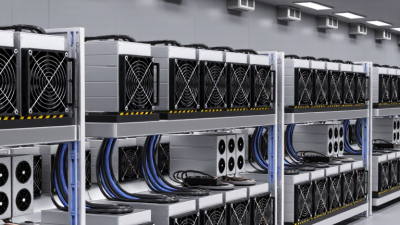
Buying an Ant Miner is not just a hardware decision. It is a choice about power, heat, noise, shipping, and the time you can devote to monitoring equipment. For global buyers, one attractive price can hide extra costs. A miner that looks affordable on a product page may need a different electrical setup, costly cooling, or a longer delivery window.
Satoshi Nakamoto wrote, “The steady addition of a constant of amount of new coins is analogous to gold miners expending resources to add gold to circulation.” This Bitcoin whitepaper observation highlights a useful point: mining involves resources, not hardware alone. It does not endorse any particular Ant Miner or guarantee a return. Treat it as context, then check the specifications and seller claims yourself.
These seven buying tips focus on practical checks: matching the model to your power supply, comparing efficiency, confirming warranty terms, and reviewing shipping and support details. Ask for clear answers about condition, included accessories, and return procedures. Keep records. Small details matter. A wattage figure on a listing is not the whole operating cost, and estimated profits can change quickly with network conditions and electricity rates. I have seen buyers focus too narrowly on the sticker price; it is an easy mistake, and these tips cannot remove every uncertainty. Use them as a careful checklist, not a promise of profit.
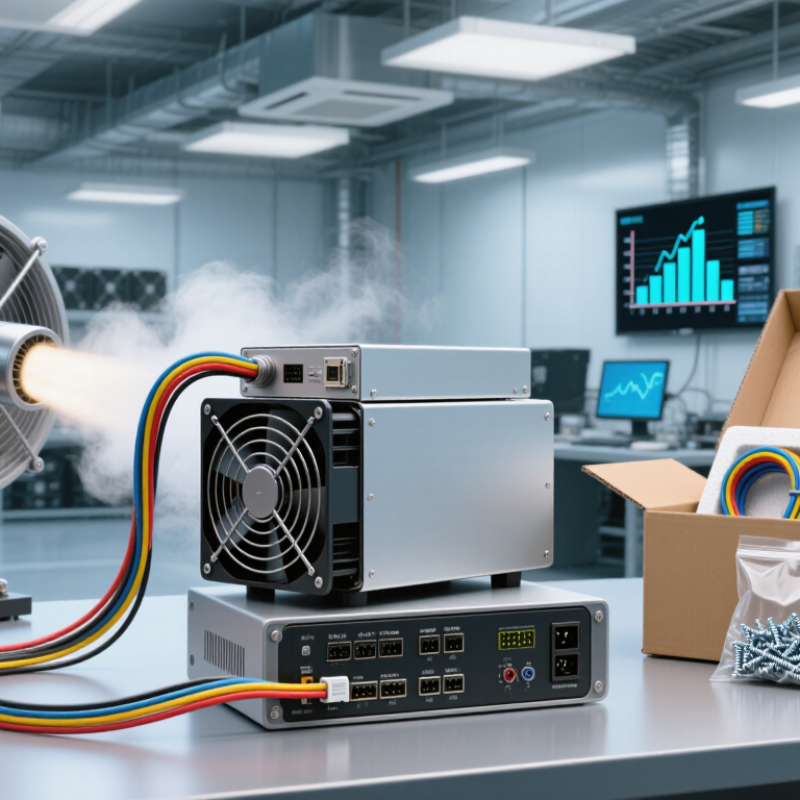
Before comparing ASIC miner models, define your mining goal. A small home setup has different limits from a dedicated facility. Write down your available power, electricity rate, and expected operating hours. Then compare hashrate with efficiency, usually stated in joules per terahash. A high hashrate can look impressive, but it may cost more to run. Numbers need context.
Check the miner’s power draw against your circuit capacity, not just your monthly budget. A unit drawing substantial power also releases substantial heat. Measure the room temperature and airflow, and consider the noise level near living or working spaces. For example, a machine beside a bedroom may be a poor fit, even if its efficiency looks attractive. Cooling is not a footnote.
Read the technical sheet carefully, then confirm key figures with the seller before ordering. Specifications can vary by operating mode, and real conditions rarely match a clean test setup. Estimate revenue using current network difficulty and your actual electricity price, but treat forecasts as uncertain. I would leave room for maintenance and downtime; it is easy to underestimate both. Choose a model you can power, cool, and monitor consistently—not merely the one with the largest headline hashrate.
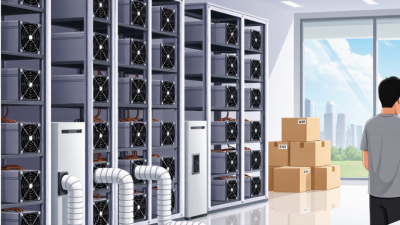
A miner’s headline hash rate is only half the comparison. Check joules per terahash (J/TH): divide its power draw in watts by its hash rate in terahashes per second. For example, a 200 TH/s unit using 3,500 watts works out to 17.5 J/TH. Lower is generally more energy-efficient, but electricity price changes the buying decision. At $0.10 per kWh, that unit uses about $8.40 of electricity daily, before cooling or other costs. Check the manufacturer’s rated draw against independent measurements where available; operating conditions can shift the real figure.
Then measure the heat, not just the noise. A 3,500-watt miner releases roughly 3.5 kW of heat into its room, like a powerful space heater running continuously. Can your intake and exhaust move that heat without recirculation? Uptime Institute’s 2024 Global Data Center Survey reported an average PUE of 1.56, a reminder that facility overhead matters, though mining rooms can differ substantially from data centers. Duct length, dust, and outdoor temperature all affect cooling needs. Small details count.
I would compare total cost per terahash over a full day, not purchase price alone. Still, the estimate is imperfect: fan wear, throttling, and local heat can change results. Check them in your actual installation.
A convincing product page is not proof of a trustworthy seller. Ask for the company’s registered details, a physical business address, and a recent invoice sample with sensitive information removed. Check that the seller’s payment account matches the business name. Request clear photos of the exact unit, including its label, ports, and packaging. If the answers feel rushed or inconsistent, pause. A low price can make doubt easy to ignore.
Tips: Ask for the miner’s serial number before payment, then confirm how its authenticity can be checked with the manufacturer or an authorized service provider. Get the warranty terms in writing. They should state the coverage period, what failures qualify, who pays shipping, and where repairs happen. Keep screenshots, emails, and payment records together. Small details matter.
Compare the serial number on the unit with the invoice and shipping documents when it arrives. Photograph the sealed package before opening it, then record the unit’s condition and startup readings. Warranty coverage can vary by seller, region, and product condition, so do not assume it transfers automatically. I have found that even careful checks leave some uncertainty; that is frustrating, but better than relying on a polished listing alone.
The advertised price is only the starting point. Request a written shipping quote to your exact delivery address, including freight, insurance, customs brokerage, and final-mile delivery. A low quote may exclude unloading or remote-area fees. Ask whether the shipment is priced by actual weight or dimensional weight, and confirm the delivery term in writing.
Taxes vary by destination and product classification. Check likely import duties, sales tax, or VAT with your customs authority or a qualified broker before paying. Keep the invoice, product specifications, and shipping documents together. Small paperwork errors can delay clearance. Budget for currency conversion and payment fees, too.
Setup has a cost of its own. Check the miner’s power draw against your site’s electrical capacity, and price suitable wiring, outlets, ventilation, and any electrician’s work. Measure the space; warm exhaust and steady fan noise are easy to underestimate. Add a contingency for unexpected charges. Even a careful estimate can miss one. A simple spreadsheet helps: equipment, freight, insurance, taxes, brokerage, delivery, and setup, each with a source and date. Recheck figures before ordering, because carrier rates and tax rules can change.
| # | Buying tip | What to check | Illustrative cost or calculation |
|---|---|---|---|
| 1 | Compare the complete purchase price | Ask for the unit price, included accessories, payment fees, warranty terms, and a written quotation. Confirm that the quoted model and condition match your order. | Example unit price: $2,000. Treat this as a planning figure, not a current market quote. |
| 2 | Get a delivered-shipping quote | Compare air and sea freight, delivery time, shipment dimensions and weight, insurance, and whether the quote includes delivery to your address or only to a port or terminal. | Illustration: freight $250 + insurance $20. Actual costs depend on route, shipment size, service, and season. |
| 3 | Confirm the shipping terms | Check the agreed Incoterms® rule and named place. Clarify who arranges transport, export and import clearance, insurance, and payment of destination charges. | Ask the seller to list excluded charges, such as customs brokerage, terminal handling, storage, and last-mile delivery, before you compare offers. |
| 4 | Estimate duty and import taxes locally | Check the product’s customs classification, customs value, country of origin, and current rates with your customs authority or a licensed customs broker. Tax rules differ by destination. | Example only: CIF value $2,270 (goods + freight + insurance); hypothetical 5% duty = $113.50. A hypothetical 20% VAT on CIF plus duty = $476.70. |
| 5 | Check power and electrical compatibility | Verify the unit’s rated power, voltage, phase, plug or connector, and circuit requirements against your site. Have a qualified electrician confirm whether the installation is suitable. | At 3.5 kW running continuously: 3.5 × 24 = 84 kWh per day. At $0.10/kWh, that is about $8.40 per day for energy, before other facility costs. |
| 6 | Budget for cooling, noise, and installation | Plan for heat removal, airflow, dust control, safe cabling, internet access, and noise limits. Confirm whether your site needs ventilation upgrades or professional electrical work. | Get local quotes for any required electrical and ventilation work; costs vary widely by site and are not included in the example landed-cost calculation. |
| 7 | Allow for clearance, delivery, and unexpected charges | Confirm the required import documents and delivery appointment process. Ask about brokerage, inspection, storage, remote-area delivery, and any applicable compliance requirements. | Illustrative pre-setup total: $2,860.20 ($2,000 goods + $250 freight + $20 insurance + $113.50 hypothetical duty + $476.70 hypothetical VAT). Add local fees and setup after verifying actual rates. |
| Planning note: All example prices and tax rates are illustrative, not destination-specific quotes. Confirm current freight, customs, tax, power, and installation costs for your shipment and location before purchasing. | |||
Before ordering an Ant miner, check the rules that apply where it will be installed and operated. Requirements can differ by country, region, and building type. Confirm import procedures, equipment certification, and any local limits on noise or heat with the relevant authorities or a qualified adviser. Do not rely on a seller’s general statement that a machine is “ready for your market.” Small details matter. Keep written records of approvals and seller responses.
Electrical compatibility deserves a close look. Compare the miner’s voltage and frequency requirements with your site’s supply, then ask a licensed electrician to assess circuit capacity, grounding, and breaker protection. A plug adapter does not fix an electrical mismatch. Also plan for continuous heat output and airflow; a spare room can become hot quickly. One point is easy to miss: an older circuit may appear suitable but still be undersized for prolonged operation. Verify the figures before connecting equipment.
After-sales support matters when a unit arrives damaged or stops working. Ask who handles warranty claims, where repairs are performed, and whether replacement parts are available in your region. Check response times, shipping responsibility, and what the warranty excludes. Save invoices, serial details, and clear photos of the package at delivery. Policies can be vague, and that is worth questioning before payment.
Values show common nominal household supply voltages, not a guarantee for every location. Before buying mining hardware, check the exact site voltage, frequency, circuit capacity, plug and connector requirements, and the equipment’s input specifications. Local rules and installation requirements may also apply.