Leave Your Message

Top Crypto To Mine in 2026?

Choosing the right Crypto To Mine in 2026 requires more than comparing coin prices. Mining profitability depends on electricity costs, hardware efficiency, network difficulty, block rewards, and market liquidity. A coin that looks profitable today may become uncompetitive after a difficulty adjustment or reward change.

The Cambridge Centre for Alternative Finance reported that Bitcoin mining remains a highly specialized industry, with professional operators using advanced application-specific integrated circuits and optimized facilities. Its research also highlights mining’s significant electricity demand, making power sourcing and efficiency central business concerns. The Bitcoin Mining Council reported that sustainable electricity represented more than half of surveyed Bitcoin mining energy use in 2024. However, this figure reflects voluntary industry reporting and should not be treated as a complete global measurement.

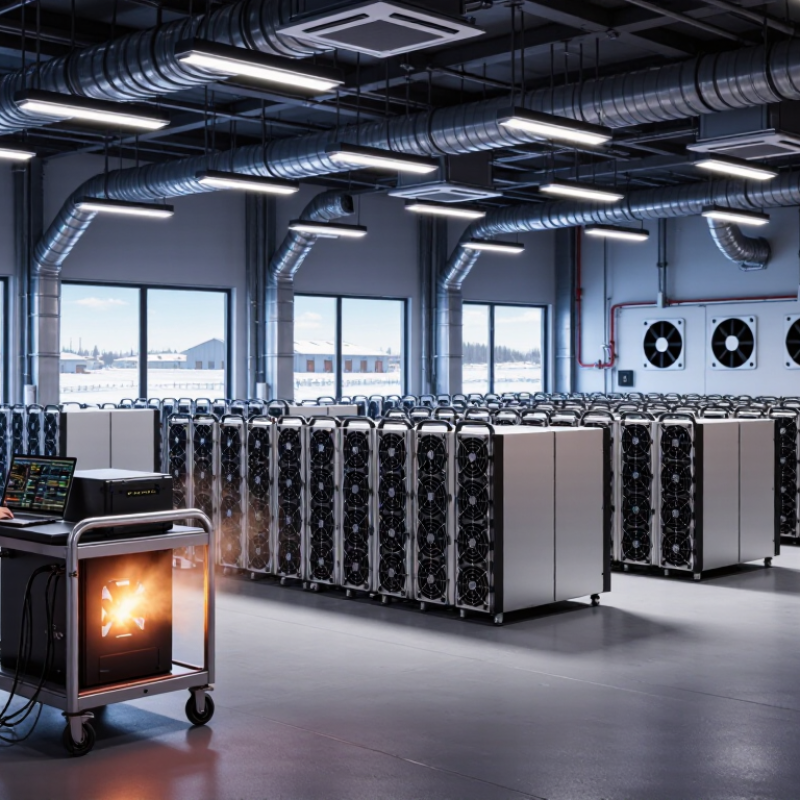
Small details matter. A modern miner running beside a warm warehouse may reduce heating costs in cold regions. An older machine can become unprofitable when electricity prices rise by only a few cents per kilowatt-hour. Mining pools also charge fees, while equipment requires cooling, maintenance, and eventual replacement. These costs are easy to overlook.

There is no universally best coin.

This guide evaluates leading mining candidates through measurable factors, including algorithm compatibility, hardware availability, network security, energy efficiency, and realistic operating expenses. It also considers evidence from developer documentation, mining dashboards, and established research. Estimates remain uncertain, especially for newer networks with limited historical data. Readers should verify current rewards, local regulations, taxes, and electricity contracts before purchasing equipment. Profit calculators help, but they are not crystal balls.
Top Crypto To Mine in 2026?

What Crypto Mining Means and How It Works in 2026

Top Crypto to Mine in 2026? Understanding the Mining Process

Crypto mining is a competition between computers. Miners collect pending transactions and place them into a proposed block. They then search for a valid number, called a nonce. The network accepts the block when its hash meets a changing difficulty target. Successful miners receive newly issued coins and transaction fees. Mining is not passive income. It is industrial computing.

In 2026, the strongest mining candidates usually use proof-of-work and support specialized hardware. Profit depends on coin price, network difficulty, electricity rates, equipment efficiency, cooling, and pool fees. A machine drawing 3,000 watts can consume about 72 kilowatt-hours daily. That detail matters more than a headline reward. The Cambridge Digital Mining Industry Report estimated global mining electricity use near 176 terawatt-hours annually in its 2024 assessment. The International Energy Agency has also warned that crypto mining can place heavy pressure on power systems.

Use measured data, not excitement. Record your miner’s real wattage at the wall. Compare it with local electricity pricing and expected difficulty changes. A calculator can still mislead. It may ignore repairs, ventilation, downtime, and taxes. Network hashrate can rise quickly after new equipment arrives, reducing each miner’s share. A suitable coin today may become unprofitable tomorrow. The Cambridge report also highlights major differences in mining efficiency and energy sources across regions. Responsible operators should verify local rules, use permitted electricity, and avoid equipment placement near flammable materials. Safety is part of profitability.
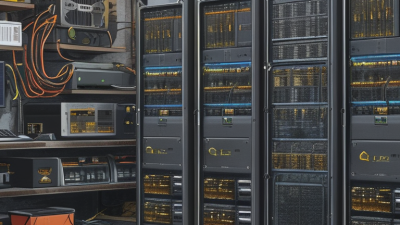
Key Factors for Choosing a Mineable Cryptocurrency

Top Crypto To Mine in 2026?

Choosing a mineable cryptocurrency starts with economics, not popularity. Proof-of-work networks differ in difficulty, block rewards, transaction fees, and hardware requirements. Electricity usually decides profitability. The Cambridge Centre for Alternative Finance estimated global Bitcoin mining used roughly 170 terawatt-hours in 2023. Its 2024 research also reported that sustainable energy supplied about 52.6% of mining activity. These figures show why energy efficiency matters as much as coin price.

Measure the full cost per unit of computing power. Check electricity rates, cooling, internet reliability, machine efficiency, and local operating rules. A network with lower difficulty may look attractive, yet thin liquidity and unstable fees can erase returns. The CoinShares Digital Asset Fund Flows report also shows how quickly cryptoasset sentiment can change, so price-based projections need caution. Use conservative assumptions.

Test before scaling.

A practical method is running a small pilot with a power meter. Record daily consumption, uptime, rejected shares, pool fees, and actual payouts for several weeks. Compare those results with the network’s current difficulty and emission schedule. My first calculations would still be imperfect because difficulty can rise after new hardware enters. That weakness matters. A spreadsheet should include a 20–30% margin for power increases, downtime, and price declines. The International Energy Agency’s Electricity 2024 analysis highlights continuing pressure on global power demand, making cheap, dependable electricity less certain in 2026. Profitability is not fixed; it is measured repeatedly.

Top Crypto To Mine in 2026? - Key Factors for Choosing a Mineable Cryptocurrency
Network Consensus & Algorithm Approx. Block or Emission Interval Supply Model Typical Mining Hardware Energy Profile 2026 Selection Strength
Bitcoin Proof of Work; SHA-256 About 10 minutes per block Maximum supply of 21 million units; issuance is reduced every 210,000 blocks Dedicated SHA-256 ASIC equipment Very high; efficiency of the ASIC and electricity price are critical High for industrial-scale mining
Litecoin Proof of Work; Scrypt About 2.5 minutes per block Maximum supply of 84 million units; issuance is reduced every 840,000 blocks Scrypt ASIC equipment; merged mining is supported with compatible networks High, but generally less computationally intensive per block than SHA-256 competition Strong where Scrypt hardware is affordable
Dogecoin Proof of Work; Scrypt About 1 minute per block No fixed maximum supply; a continuing reward of 10,000 units per block supports ongoing issuance Scrypt ASIC equipment; commonly mined through merged mining High; profitability is sensitive to electricity costs and network difficulty Relevant for established Scrypt operations
Monero Proof of Work; RandomX About 2 minutes per block Initial issuance followed by tail emission of 0.6 units per block to maintain miner incentives Modern desktop CPUs are generally preferred; GPU performance is less dominant than on many other algorithms Moderate per device, although profitability depends on processor efficiency and cooling Accessible for small-scale miners
Kaspa Proof of Work; kHeavyHash Approximately 1-second target block interval in its blockDAG design Capped supply of approximately 28.7 billion units with a declining emission schedule Specialized mining equipment is available; GPU suitability has declined as hardware competition increased Moderate to high, depending on equipment efficiency and network difficulty Promising only after hardware-cost analysis
Ethereum Classic Proof of Work; Etchash Approximately 13 seconds per block Maximum supply of approximately 210.7 million units; block rewards decline periodically Etchash-compatible GPUs and specialized equipment with sufficient memory Moderate to high; GPU efficiency, memory requirements and heat management matter Suitable for flexible GPU operators
Evaluation note: Mining profitability changes continuously with coin price, network difficulty, block rewards, equipment efficiency, uptime, pool fees and electricity cost. The categories above describe protocol characteristics and hardware requirements rather than guaranteed returns.

Top Crypto Mining Options for Different Hardware Types

Top Crypto To Mine in 2026?

Top Crypto Mining Options for Different Hardware Types

Mining choices in 2026 should start with hardware, not hype. ASIC machines suit mature, algorithm-specific networks with high difficulty. They produce strong hash rates. However, they consume serious electricity and can lose value quickly. The Cambridge Digital Mining Industry Report 2024 estimated that Bitcoin mining used 121 TWh in 2023. It also reported 55.4 million tonnes of carbon emissions. Sustainable energy represented 52.6% of the electricity mix. Efficiency is a practical filter, not a slogan.

GPUs provide more flexibility across changing algorithms. They can also serve gaming or computing needs later. That flexibility matters when mining rewards fall. CPUs suit smaller networks with memory-heavy algorithms, but their returns are usually modest. Storage-based networks need large disks, reliable connections, and careful maintenance. I would not call any option universally best. Network difficulty, power price, cooling, and equipment resale value can change the result. The International Energy Agency reported that data centres consumed about 460 TWh globally in 2022, with demand potentially exceeding 1,000 TWh by 2026. Competition for electricity may become sharper.

Tips: Measure your real power cost first. Include cooling and downtime. Test one machine before expanding. Keep a simple daily log. A small mistake in your energy estimate can erase months of rewards. Check report dates carefully, because mining data becomes outdated fast.

Mining Profitability, Costs, and Reward Models

Top Crypto To Mine in 2026?

Mining Profitability, Costs, and Reward Models

Choosing the top crypto to mine in 2026 depends less on price predictions than on measurable operating costs. Proof-of-work networks reward computing power, but difficulty usually rises when more machines join. Record your machine’s hash rate, power draw, uptime, and pool fee. Then multiply daily electricity use by your local tariff. Small errors matter. At 1,000 watts, a continuously running machine uses about 24 kilowatt-hours daily. Cooling adds more demand, especially in a warm garage.
Hardware cost and lifespan can decide profitability before the first reward arrives. Specialized equipment may be efficient, while general-purpose graphics hardware can offer more flexibility. Compare purchase price, expected resale value, repairs, and noise.
Do not treat block rewards as fixed income. Some networks reduce issuance through scheduled halvings; others rely more heavily on transaction fees. Coin prices can move sharply. Difficulty can change weekly. A profitable spreadsheet today may be wrong next month.
Reward models deserve careful reading. Solo mining offers full block rewards but irregular payouts. Pool mining smooths income through shared distributions, usually after fees and minimum thresholds. Check whether payouts follow proportional shares, pay-per-share terms, or a score-based formula. Use conservative assumptions: high electricity, lower prices, occasional downtime, and rising difficulty. In one trial, ignoring two maintenance days overstated monthly returns. That mistake was obvious later. Local regulations, tax duties, ventilation, and electrical safety also belong in the calculation.

Risks, Regulations, and Future Trends in Crypto Mining

Top Crypto To Mine in 2026?

Risks, Regulations, and Future Trends in Crypto Mining

Choosing the top crypto to mine in 2026 will not mean chasing the highest coin price. It will require checking network difficulty, block rewards, hardware costs, and electricity rates. A profitable coin today may become unprofitable after one difficulty adjustment. A simple spreadsheet can reveal this quickly. Record daily power use, cooling costs, uptime, and revenue. Small errors matter.

Regulation creates another layer of risk. Mining rules differ across countries, regions, and utility markets. Some areas restrict energy-intensive operations, while others require permits, tax reporting, or environmental disclosures. Miners should confirm local rules before purchasing equipment. They should also document income and expenses carefully. Ignoring compliance can cost more than electricity.

Future mining may favor efficient hardware, renewable power, and flexible operations. Facilities that reduce output during grid shortages could receive better terms. Heat recovery may also turn waste into a useful resource for buildings or greenhouses. Yet cleaner energy does not remove every concern. Equipment still becomes outdated, and coin prices remain unstable. My own assessment would leave room for doubt. Forecasts often look precise, but mining rarely behaves that neatly.

Top Crypto to Mine in 2026? Risks, Regulations, and Future Trends

Target block intervals show how frequently each proof-of-work network is designed to produce a new block. A shorter interval does not automatically mean higher mining profitability.

Values are protocol target intervals: Bitcoin 10 minutes, Litecoin 2.5 minutes, Dogecoin 1 minute, and Monero 2 minutes. Actual mining returns in 2026 will also depend on network difficulty, block rewards, coin prices, electricity costs, hardware efficiency, taxation, and local regulations. Proof-of-work mining may face additional restrictions where energy use or emissions are regulated.