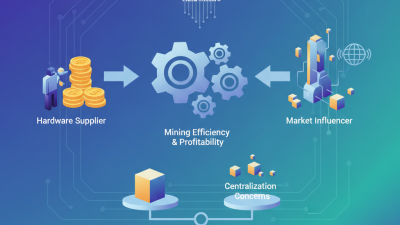
Why Is Crypto To Mine Still Profitable in 2026? The answer depends less on excitement and more on disciplined calculation. Mining revenue can change within hours, while electricity bills arrive with predictable timing. A profitable setup must survive both pressures.
Experienced miners usually begin with the electricity rate, not the coin’s market price. A modern ASIC may consume thousands of kilowatt-hours each month. In a warm garage, cooling can add another hidden cost. Hardware efficiency, network difficulty, pool fees, downtime, and maintenance also affect the result. Small differences matter.
Numbers tell the real story.
Some miners may still find attractive margins in regions with affordable, reliable power. Others may lose money despite using efficient equipment. Bitcoin and other mineable assets can rise sharply, but volatility can erase expected returns overnight. Network competition may also increase after new hardware enters the market.
This is where professional judgment becomes important. Use current mining calculators, verify their assumptions, and compare results across several price scenarios. Review manufacturer specifications carefully. Check local rules, tax obligations, electricity contracts, and environmental requirements before purchasing equipment. Mining should remain compliant and transparent.
The phrase Crypto To Mine sounds simple, but the decision is not. A coin with strong rewards today may become uncompetitive tomorrow. I have seen forecasts look convincing until cooling, repairs, or currency conversion changed the final calculation. That uncertainty deserves honest attention.
Profitability in 2026 may still exist, but it is selective. It rewards patience, accurate records, efficient hardware, and realistic expectations. Sometimes, the best decision is waiting.
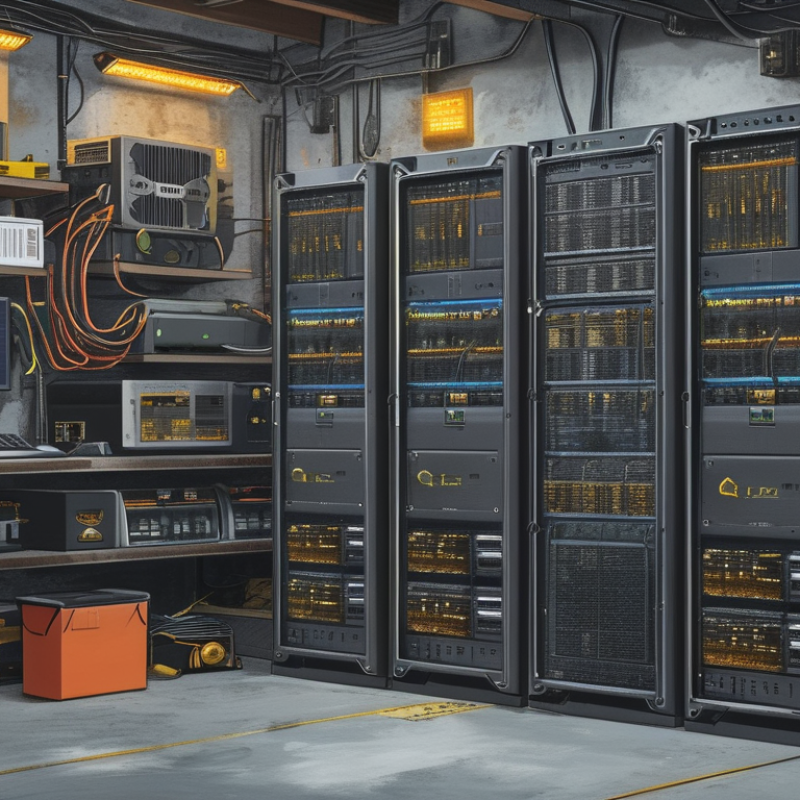
Why Is Crypto To Mine Still Profitable in 2026?
After the latest halving, the protocol pays 3.125 BTC for each valid block. This subsidy is the foundation of mining revenue. It is not guaranteed income. Block rewards arrive roughly every ten minutes, but individual miners may wait much longer without pooled participation.
A modern mining operation must measure electricity carefully. A machine drawing 3,000 watts can consume about 72 kilowatt-hours daily. At $0.06 per kilowatt-hour, that equals $4.32 before cooling, repairs, and hosting costs. Transaction fees add another revenue stream, especially when network demand rises. However, fees can fall sharply within hours. That uncertainty makes cash-flow planning difficult.
Efficiency matters more than headline coin prices. A newer machine may produce more computing power while using less electricity per unit of work. Difficulty adjustments can still reduce expected output. I have found that simple spreadsheets often hide important losses, including downtime and delayed repairs. My own assumptions would need regular testing. Profitability also depends on selling decisions, tax treatment, equipment depreciation, and local energy conditions. The 3.125 BTC subsidy supports the model, but fees and operating discipline increasingly decide whether mining remains viable.
Why Is Crypto To Mine Still Profitable in 2026?
Mining can remain profitable in 2026 when hashprice supports operating costs. Hashprice measures expected daily revenue for each unit of computing power. It combines block rewards with transaction fees. A stronger hashprice can improve margins, but electricity prices still decide the outcome. Two machines may earn similar revenue while producing very different profits. Efficiency matters.
Fee markets provide another useful signal. When users compete for limited block space, transaction fees rise. This can lift miner revenue when scheduled reward reductions weaken issuance income. Recent mining data suggests that fee spikes are often temporary, not guaranteed monthly income. A careful operator should compare several weeks of fee activity, not one exciting day. I would also question any model using perfect uptime. Real machines overheat, pause, and need repairs.
Tips: Track hashprice, local power costs, machine efficiency, cooling expenses, and downtime together. Use conservative fee assumptions. Keep a cash reserve for repairs. Test profitability under lower prices and weaker fees. The honest answer may be uncomfortable: mining is profitable only during selected conditions, not everywhere. A spreadsheet can expose that quickly.
Hashprice and fee markets: protocol-based signals from the proof-of-work mining economy
The block subsidy is fixed by protocol and falls after each halving, while transaction fees are determined by demand for block space. In 2026, miners therefore rely more heavily on market-driven fees, asset price, and network hashprice to offset the lower subsidy per block.
Crypto mining can remain profitable in 2026 when ASIC efficiency improves faster than network difficulty. The key measure is joules per terahash, not headline hash rate. A 200 TH/s machine using 20 J/TH consumes about 4 kWh each hour. At $0.05 per kWh, daily electricity costs near $4.80. Cambridge CCAF’s 2024 Digital Mining Industry Report estimated that sustainable sources supplied 52.6% of surveyed mining electricity. That shift may reduce exposure to unstable fuel markets, but it does not guarantee profit.
Break-even costs depend on hashprice, uptime, cooling, pool fees, and hardware depreciation. Suppose hashprice reaches $0.06 per TH per day. A 200 TH/s unit earns roughly $12 daily before expenses. Its electricity break-even point is near $0.125 per kWh, before repairs and financing. If hashprice falls to $0.04, that threshold drops below $0.085. The margin disappears quickly. My estimate is deliberately rough. Real facilities lose efficiency during heat waves, maintenance, and curtailment events. Cambridge CCAF benchmarking also identifies electricity as the dominant operating expense for many miners.
Tips: Track J/TH weekly, not once. Calculate with your actual tariff. Include cooling power. Keep a reserve for failed power supplies. A cheaper machine may cost more over twelve months. Profit can look healthy on a spreadsheet, then weaken after difficulty rises.
Why Is Crypto To Mine Still Profitable in 2026?
Power economics now decides whether crypto mining remains profitable. The Cambridge Centre for Alternative Finance estimated Bitcoin mining consumed about 121 terawatt-hours in 2023. Its research also placed average network hashrate near 665 exahashes per second. Public network data later showed hashrate moving above 800 exahashes. More machines are competing for each block.
Efficiency matters more than machine count.
The U.S. Energy Information Administration reported average industrial electricity prices near 8 cents per kilowatt-hour in 2024. Large mining facilities can negotiate lower rates, but pricing varies sharply by region, contract length, and grid conditions. At 5 cents per kilowatt-hour, a modern machine using 20 joules per terahash has a very different cost profile from one paying 10 cents. Cooling, repairs, transformers, and downtime still reduce the headline margin.
The International Energy Agency expects global data-centre electricity demand to rise substantially by 2026, with crypto mining contributing to that pressure. Higher demand may bring stricter grid rules or less favorable contracts. That risk is easy to underestimate. A spreadsheet can show profit while ignoring curtailment hours, equipment aging, and sudden difficulty increases. My own view is cautious: cheap industrial power can support mining, but only when efficiency, uptime, and contract flexibility are measured together. Hashrate growth makes that discipline unavoidable.
| Category | Metric | Period | Observed or Assumed Value | Unit | Interpretation |
|---|---|---|---|---|---|
| Bitcoin Network and Market Conditions | |||||
| Network scale | Average Bitcoin network hashrate | 2020 | Approximately 153 | EH/s | Represents the approximate annual average computational power securing the network before the latest major hardware and infrastructure expansion. |
| Network scale | Average Bitcoin network hashrate | 2021 | Approximately 173 | EH/s | Hashrate remained elevated despite substantial regional changes in mining activity. |
| Network scale | Average Bitcoin network hashrate | 2022 | Approximately 245 | EH/s | Higher competition increased the amount of computing power required to earn the same share of block rewards. |
| Network scale | Average Bitcoin network hashrate | 2023 | Approximately 392 | EH/s | Rapid hashrate growth increased pressure on operators with high electricity and maintenance costs. |
| Network scale | Average Bitcoin network hashrate | 2024 | Approximately 700 | EH/s | Network competition continued rising after the April 2024 block subsidy reduction. |
| Block reward | Bitcoin block subsidy | After April 2024 | 3.125 | BTC per block | The subsidy was reduced from 6.25 BTC to 3.125 BTC, increasing the importance of low-cost power, efficient machines and transaction-fee income. |
| Block production | Target block interval | Protocol rule | Approximately 10 | minutes | The network adjusts mining difficulty approximately every 2,016 blocks to maintain the target interval. |
| Industrial Electricity Economics | |||||
| Electricity cost | Illustrative low-cost industrial power | 2024 benchmark range | 3.0–5.0 | US cents per kWh | Usually associated with long-term contracts, surplus generation, curtailment programs or locations with unusually low wholesale power costs. |
| Electricity cost | Illustrative mid-cost industrial power | 2024 benchmark range | 5.0–8.0 | US cents per kWh | This range can support efficient mining hardware when uptime, cooling and financing costs are well controlled. |
| Electricity cost | Illustrative high-cost industrial power | 2024 benchmark range | 8.0–12.0+ | US cents per kWh | At this level, older equipment is commonly uncompetitive unless bitcoin prices or transaction-fee revenue are unusually strong. |
| Power share | Electricity as a share of direct mining cost | 2026 operating model | 70–85 | % of direct cost | Power normally remains the largest controllable expense for a large-scale mining operation. |
| Infrastructure | Non-power operating overhead | 2026 operating model | 15–30 | % of direct cost | Includes cooling, repairs, labor, networking, site operations, insurance and other facility expenses; the range varies by location and equipment age. |
| 2026 Mining Efficiency Model | |||||
| Hardware efficiency | Modern application-specific mining equipment | 2026 planning assumption | 15–20 | J/TH | Lower joules per terahash means less electricity is required to produce the same computational output. |
| Hardware efficiency | Older but still serviceable equipment | 2026 planning assumption | 25–35 | J/TH | These machines may remain viable only with cheaper power, strong uptime and favorable market conditions. |
| Facility utilization | Operational uptime target | 2026 planning assumption | 92–97 | % of available hours | Downtime directly reduces mined bitcoin while fixed infrastructure and financing expenses continue. |
| Cooling demand | Additional facility load | 2026 planning assumption | 5–20 | % above machine electricity | Cooler climates and efficient facility designs generally reduce the additional energy required for heat management. |
| Estimated 2026 Profitability Sensitivity | |||||
| Power price | At 4 US cents per kWh | 2026 scenario | Generally favorable | Operating outlook | Efficient equipment can retain a meaningful gross margin if bitcoin market conditions remain supportive and uptime is high. |
| Power price | At 6 US cents per kWh | 2026 scenario | Potentially viable | Operating outlook | Profitability becomes more sensitive to network hashrate growth, equipment efficiency, transaction fees and financing costs. |
| Power price | At 8 US cents per kWh | 2026 scenario | Selective | Operating outlook | Only highly efficient machines, favorable contracts or exceptional market conditions are likely to produce attractive margins consistently. |
| Power price | Above 10 US cents per kWh | 2026 scenario | High risk | Operating outlook | Older hardware is likely to face negative operating margins, while newer machines may operate near break-even during weak market periods. |
| Network competition | Effect of continued hashrate growth | 2026 scenario | Margin compression | Economic effect | When hashrate rises faster than bitcoin price and fee revenue, each unit of installed computing capacity earns less bitcoin. |
| Revenue diversification | Transaction-fee contribution | 2026 scenario | Variable upside | Revenue source | Fees can temporarily improve miner revenue, but they are volatile and should not be treated as a fixed replacement for the block subsidy. |
| Overall conclusion | Why mining may remain profitable | 2026 | Low-cost power plus efficient hardware | Primary driver | Mining can remain profitable when operators secure electricity below the economic break-even level, deploy efficient equipment and maintain high utilization despite rising network competition. |
Mining remains profitable in 2026, but gross revenue offers false comfort. The 2024 Cambridge Digital Mining Industry Report estimated Bitcoin mining used about 138 terawatt-hours annually. That scale makes electricity contracts, machine efficiency, and cooling losses central risk variables. A miner earning 0.05 BTC daily can still lose money when power costs rise faster than coin prices. Small margins disappear quickly.
Risk-adjusted analysis starts with price volatility, not a bullish forecast. Use a downside BTC price, then subtract electricity, hosting, maintenance, financing, and tax costs. Difficulty resets every 2,016 blocks, forcing revenue per machine lower when competing hashrate expands. The International Energy Agency’s Electricity 2024 report links data-center growth with tighter grid pressure. Location and curtailment terms therefore matter more. This estimate can break.
Fees deserve separate treatment. The block subsidy fell to 3.125 BTC after the 2024 halving, so transaction fees matter more. Yet fee income is episodic; congestion can lift it sharply, then normalize within days. Regulatory exposure belongs in the model too. Energy disclosure rules, licensing demands, and changing tax treatment may add costs without increasing hashrate. My practical test stresses price down, difficulty up, fees down, and power costs up. I still underweight repair delays. Many spreadsheets do not survive that ugly case.