How to Choose the Best Bitcoin Miner for Your Needs?
Choosing the right Bitcoin miner is essential in today's digital landscape. With Bitcoin's price reaching an all-time high of over $60,000 in 2021, miners have seen a surge in interest. According to recent industry reports, the global Bitcoin mining market is projected to reach $12 billion by 2025. This growth emphasizes the need for miners to select equipment tailored to their needs.
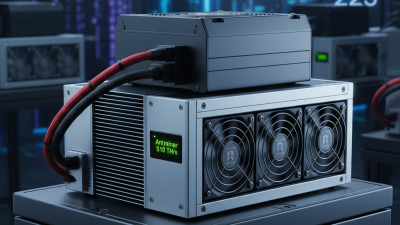
When considering a Bitcoin miner, factors like hash rate, energy efficiency, and initial investment are crucial. For instance, devices like the Antminer S19 Pro offer a high hash rate but may come with a hefty price tag. Not all miners have the same profitability. Some setups require more maintenance than others, leading to potential hidden costs.
Moreover, the rapid advancements in mining technology can leave miners with outdated equipment sooner than expected. As the Bitcoin network becomes more competitive, it's vital to stay informed about the latest trends. Making informed decisions can be challenging. Reflecting on personal needs and market shifts is key to successful mining.
Understanding Bitcoin Mining and Its Importance in Cryptocurrency
Bitcoin mining plays a crucial role in the cryptocurrency ecosystem. It secures the network and verifies transactions.
Miners use powerful hardware to solve complex mathematical problems. This process is called proof-of-work. As a result, miners are rewarded with new bitcoins. According to the Cambridge Centre for Alternative Finance, Bitcoin mining consumes around 0.5% of the world's electricity. This highlights the need for energy-efficient mining solutions.
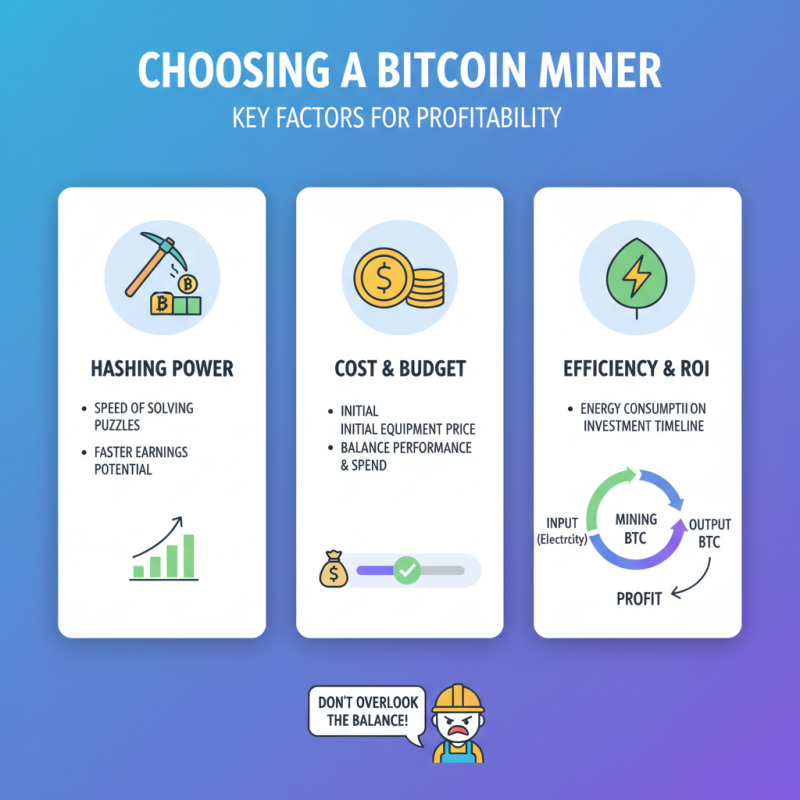
When choosing a Bitcoin miner, consider your energy costs. High electricity fees can eat into your profits. Look for hardware that offers the best hash rate-to-energy consumption ratio. For better performance, use an ASIC miner that suits your budget and needs. Research shows that efficient miners can significantly increase profitability.
Tips: Join mining pools to reduce variance in rewards. You’ll receive smaller, more frequent payments. Moreover, stay updated with market trends. Mining profitability fluctuates based on Bitcoin prices and difficulty levels. Regular assessment may help you adapt your mining strategy. Remember, the cryptocurrency market is volatile and requires constant vigilance.
Analyzing Mining Hardware: ASIC vs. GPU for Efficiency
Choosing the right mining hardware is essential. Two main types are ASIC and GPU. ASIC miners excel in efficiency. They are purpose-built for Bitcoin mining. Their performance often surpasses that of GPUs. For example, ASIC miners can reach hash rates of 100 TH/s or more. This efficiency can optimize electricity costs significantly.
However, GPUs offer versatility. They are not limited to Bitcoin alone. Miners can use GPUs for various cryptocurrencies. This adaptability can be advantageous, especially in a fluctuating market. A report from the Cambridge Centre for Alternative Finance states that GPU miners accounted for about 25% of the total hash rate in certain altcoins, highlighting their role in the ecosystem.
Still, both options have downsides. ASIC miners can be expensive. Their specialized nature means they may not hold value long-term. On the other hand, GPUs can consume more power. In some cases, they are less efficient in mining Bitcoin. It's crucial to evaluate your needs. Balancing performance and cost is vital in making an informed decision.
Evaluating Hash Rate and Energy Efficiency for Optimal Performance
Choosing the right Bitcoin miner is crucial. Evaluating hash rate and energy efficiency should be your main focus. The hash rate determines how many calculations your miner can perform every second. A higher hash rate means faster mining. Yet, higher performance often comes with higher energy consumption. Balancing these factors is essential.
Tips: Look for miners with an optimal hash rate-to-energy consumption ratio. Don’t overlook the initial cost. Sometimes, cheaper miners have lower performance. You might spend more on electricity over time.
Energy efficiency is key. Miners with better efficiency produce more Bitcoin for less energy. This can significantly lower operation costs. Keep an eye on the power supply requirements as well. Sometimes, a miner might seem perfect until you realize the energy it consumes.
Tips: Research the cooling requirements too. Higher performing miners often generate more heat. Adequate cooling solutions can prevent overheating and prolong the lifespan of your equipment. Aim for a well-rounded approach. Being mindful of both hash rate and energy use can lead to better choices.
How to Choose the Best Bitcoin Miner for Your Needs?
| Miner Model |
Hash Rate (TH/s) |
Power Consumption (W) |
Energy Efficiency (J/TH) |
Price ($) |
| Model A |
100 |
3500 |
35 |
2000 |
| Model B |
90 |
3000 |
33.33 |
1800 |
| Model C |
85 |
2800 |
32.94 |
1700 |
| Model D |
70 |
2500 |
35.71 |
1500 |
| Model E |
65 |
2400 |
36.92 |
1400 |
Budgeting for Your Bitcoin Mining Operation: Costs and ROI Analysis
Budgeting for your Bitcoin mining operation is crucial. It starts with understanding the initial costs. Consider the price of hardware, energy consumption, and cooling systems. Each detail matters. Without attention, costs may spiral. Choose the right miner based on efficiency.
Evaluate ongoing expenses like electricity bills. Mining can consume a lot of power, impacting your return on investment. Analyze local energy rates. Availability of renewable sources can help reduce your expenses. However, location changes can come with their own challenges. Assess whether your setup is sustainable long term.
Return on investment (ROI) is not always guaranteed. Market volatility affects profitability. If Bitcoin prices drop, mining may not be worthwhile. Regularly check profit margins and adjust your strategy as needed. Flexibility is key in this dynamic environment. Reflect on your decisions to ensure your mining operation remains viable.
Cost Analysis of Different Bitcoin Miners
This bar chart illustrates the cost analysis of various Bitcoin miners on the market. Understanding the initial investment is crucial for budgeting your Bitcoin mining operation and assessing potential ROI.